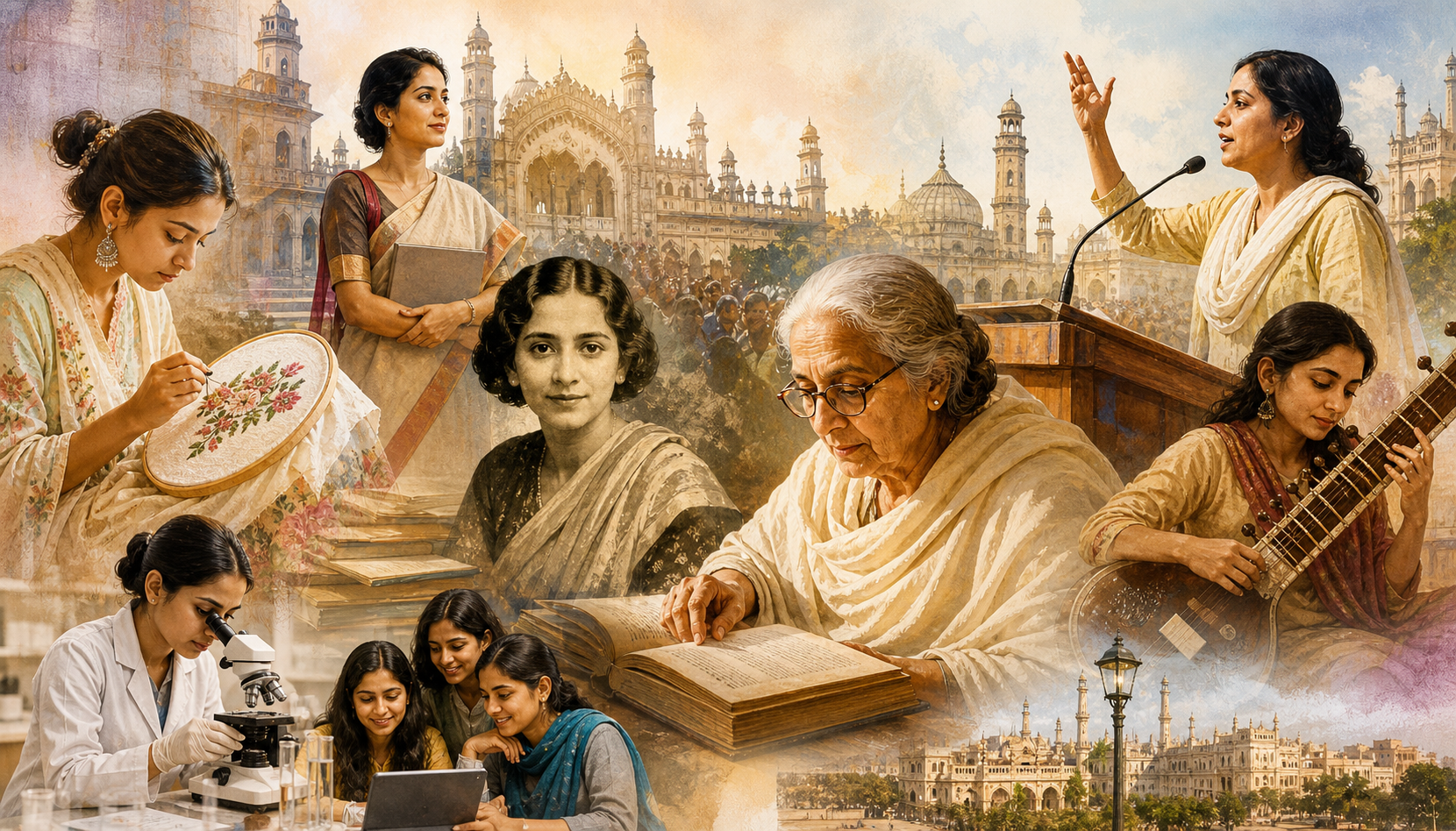
Lucknow: In a significant cultural initiative, an exhibition titled “Feminists of Awadh par Salaam: Tracing Lucknow Through Its Women” will shed light on the often-overlooked contributions of women in shaping the legacy of Lucknow. The exhibition, now in its sixth edition, marks over fifteen years of sustained research and collaboration with collectors, families, and local communities to bring women’s histories to the forefront.
While Lucknow is globally celebrated for its nawabi heritage, cuisine, literature, and refined culture, this exhibition seeks to rebalance the narrative by placing women at the center of its historical and contemporary discourse.

Celebrating Unsung Heroines
The exhibition presents detailed portraits and histories of more than 50 influential women, including Savitri Sahni, Begum Aizaz Rasul, Rasheed Jahan, Sucheta Kriplani, Gaura Pant Shivani, and Prakashvati Pal.
One of the key highlights is the story of Savitri Sahni, who played a pivotal yet under-recognized role in sustaining the Birbal Sahni Institute of Palaeosciences after the demise of her husband, noted scientist Birbal Sahni, just days before its inauguration.
The exhibition also features contemporary voices such as journalists Sunita Aron, Neha Dixit, and Soniya Nityanand, offering context to their contributions in present times.
Mapping Women’s Spaces in the City
A distinctive feature of the exhibition is a “feminist map” of Lucknow, highlighting spaces created by and for women across education, arts, science, and politics. It showcases institutions such as Loreto Convent Lucknow, Isabella Thoburn College, Karamat Husain Muslim Girls PG College, and Talimagh-e-Niswan, an initiative associated with writer Attia Hosain.
These institutions played a transformative role in promoting women’s education at a time when formal schooling for girls was not widely accepted. Anecdotes shared by former educators reveal that young girls once travelled in palkis (palanquins) and lived in hostels with guardians to pursue education—an indication of the social barriers they overcame.
From Tradition to Modern Empowerment
The exhibition draws a powerful contrast between past and present, documenting the journey from limited access to education to growing empowerment. While some traditional institutions face challenges in adapting to modern demands, new organizations such as Manjhi Foundation and Prerna Girls School are addressing pressing issues like menstrual health, mental well-being, digital literacy, and financial independence for women.

Custodians of Culture and Heritage
A dedicated section revisits how women have been the silent custodians of Lucknow’s famed tehzeeb, sustaining traditions like chikankari embroidery, culinary heritage, and intergenerational knowledge systems. Despite their central role, their contributions have largely remained in the background of mainstream historical narratives.
Women in Politics and Public Life
The exhibition also delves into the political journey of women from Awadh, linking historical struggles to contemporary debates such as the Women’s Reservation Bill. It highlights leaders like Sucheta Kriplani, Begum Aizaz Rasul, and Mayawati, who broke barriers and carved a space in India’s political landscape.
Literature as Resistance
Another compelling segment focuses on the role of literature in social reform. The exhibition revisits the Progressive Writers’ Conference 1936, presided over by Munshi Premchand, which became a cornerstone of the Progressive Writers’ Movement.
Women writers from the region, including Rasheed Jahan, Attia Hosain, and Ismat Chughtai, are showcased for their bold use of literature to challenge patriarchy, orthodoxy, and social injustice.
Reclaiming the Narrative
By weaving together personal histories, institutional milestones, and cultural insights, “Feminists of Awadh par Salaam” offers a nuanced and inclusive retelling of Lucknow’s past and present. It not only honors the contributions of women but also invites viewers to rethink history through a more equitable lens.
The exhibition stands as a reminder that the story of Lucknow is incomplete without acknowledging the women who have shaped its identity—often quietly, but profoundly.






 ---------------------------------------------------------------------------------------------------